It is not just that I miss my friends when I want to hang out, or Pita when I really need a hug, it’s the feeling of being alone, and lost, that I just can’t shake off of me. When discussing the feeling with the Dutchies here in Berkeley and The City,
routine was a recurring word. Now that I think about it, ‘ritual’ might be a better term for the phenomenon. What I’m talking about, of course, is the
lack of ritual.
When I chaired the Student Union, I got up at 8.30 every morning, took a quick shower, made myself some bread and jumped behind my computer. While having breakfast, I read the morning papers online and checked my e-mail for urgent messages. At around 9.10 I would ride my bike to the train station, get on the train and arrive at Utrecht Central Station 10 minutes to 10, just in time to make it to the office by 10 o’ clock. Although my day at the office differed greatly from day to day (and wouldn’t actually be at the office nor in Utrecht, most of the time), it always started with my morning ritual. Complimentary to
my ritual,
the board had a weekly ritual of meeting every Monday morning, of having lunch collectively every day around 1 pm and of drinking beers together after long evening sessions (although I used to skip those as often as I could in order to have my ‘evening ritual‘ of smoking a joint with my friends before going to bed - or frantically doing overwork, whichever got in my mind first).
It is these kinds of rituals that I am currently lacking. And, although it might not be a
completely adequate nor
total explanation, I think it goes a long way into explaining the feeling that I have. Luckily, for me, the definition of the problem also provides me with a solution: working on attaining such rituals.
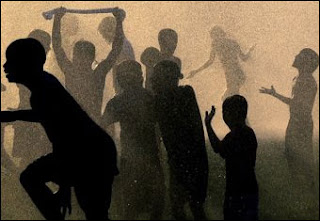
There is, however, a sharp distinction between rituals that serve a primary function and those whose purpose lie in their secondary effects. A rain dance, for example, falls in the second category. Although it might appear to be centered around making rain come down from the sky, its real purpose lies in having a public gathering, bringing people together, establishing solidarity, etc. In Berkeley, I encountered an interesting example of a ritual of the other category. Except for the main streets, there are no traffic lights on crossroads. When walking on the sidewalk and crossing streets, you need not look out for cars, though, because they will stop at each and every crossroad. The absence of traffic lights seems to have led to the creation of a ritual for drivers to stop at every crossroad, look left and right, then drive on. Rule (traffic light) was replaced by ritual, as it were.
The example serves to illustrate my point that two very different kinds of ritual should be discerned. The latter example being a very functional sort of ritual, not in its side-effects, but in its very essence: safety. On that aspect exactly, does it differ from the ritual I described in reference to coping with being away from home. In that context, the importance of the ritual, for me, lay precisely in its side-effects: giving meaning to daily tasks, reducing to the background the feeling of loneliness and being lost. Come to think of it, maybe writing on my blog could be my first new ritual.


