Sofa activism
Never been a great fan of Faithless, but then again I never really listened to their lyrics either. Well, I did today and I can't say that I didn't appreciate what I heard. While perhaps less relevant than when released in early 2004, to me this song still gives a fairly harsh but valid message. So hereunder you find the lyrics of the song that was playing on my iPod today: Mass Destruction. Above, the music video. Enjoy!
----
My dad came into my room holding his hat,
I knew he was leaving,
He sat on my bed told me some facts. Son,
I have a duty, calling on me.
You and your sister - be brave my little soldier.
And don't forget all I told you.
You're the mister of the house now remember this,
And when you wake up in the morning give your momma a kiss.
Then I had to say goodbye,
In the morning woke momma with a kiss on each eyelid.
Even though I'm only a kid,
Certain things can't be hid.
Momma grabbed me,
Held me like I was made of gold,
But left her inner stories untold.
I said, momma it will be alright,
When daddy comes home, tonight.
Whether long range weapon or suicide bomber,
A wicked mind is a weapon of mass destruction.
Whether the Soaraway Sun or BBC 1,
Misinformation is a weapon of mass destruct.
You could be Caucasian or a poor Asian,
Racism is a weapon of mass destruction.
Whether inflation or globalization,
Fear is a weapon of mass destruction.
Whether Halliburton, Enron or anyone,
Greed is a weapon of mass destruction.
We need to find courage, overcome,
Inaction is a weapon of mass destruction.
The skin under my chin is exploding again.
I'm getting stress from some other children,
I'm holding it in.
We're taking sides like a politician.
And if I get friction we get to fighting.
I'll defend my dad he's the best of all men,
and whatever he's doing he's doing the right thing.
It's frightening, but it makes me mad,
Why do all of these people seem to hate my dad?
And if that ain't enough now i get these spots.
I go to sleep every night with my stomache in knots.
And what's more, i can hear momma next door,
Explore the radio for reports of war.
And all we ever seem to do is hide the tears.
Seems like daddy's been gone for years.
But he was right, now i'm geared up for the fight,
and he would be proud of me.
If my daddy came home tonight.
My story stops here, lets be clear.
This scenario is happening everywhere.
And you ain't going to nirvana or far-vana,
you're coming right back here to live out your karma.
With even more drama than previously, seriously.
Just how many centuries have we been,
waiting for someone else to make us free?
And we refuse to see,
that people overseas suffer just like we:
Bad leadership and ego's unfettered and free,
Who feed on the people they're supposed to lead.
I don't need good people to pray and wait,
For the lord to make it all straight.
There's only now, do it right,
'Cos I don't want your daddy, leaving home tonight.
Election Day from up close

Yesterday I had the opportunity to experience the American Presidential Primary Elections from very close by. Very close, since one of the approx. 50 polling stations in Berkeley was located in my house. In the living room, to be exact. (If you look close, you can see the Alpha Chi Sigma mark on the porch steps and on banners in the living room.) Since the number of voters wasn’t that high, I had plenty of time to talk to the volunteers in charge of the polling process (‘poll workers’) and took a look for myself at the polling equipment and procedures. Of course I also did my part in maintaining order and efficiency (I brought them coffee) and when the polling station closed, I joined my housemates for long hours of watching voting outcomes on television. Let me share with you some of the peculiarities that I came across.
One of the first things I noticed at our polling station was the special box designated for ‘provisional’ votes. This box embodies a complicated set of regulations (barriers, if you ask me) for the polling process. First, voters have to register in order to be able to cast their vote [i]. This can be problematic since registration is state-based; therefore you have to vote in the state where you have been registered. While it might be just a minor inconvenience (for a large group of people; estimated around 20% of votes cast in California were sent in by mail), yesterday’s election showed another disadvantage of the system: time-lag. Voting by mail was opened weeks earlier than voting at the polling station. This had a great impact on California: 10% of Democratic votes were cast on John Edwards, a candidate who stepped out of the race days before Election Day.
Of course there are always people who forget to mail in their votes. Add to that the number of people who failed to show a valid identification at the polling station, the people who registered just before the deadline and those who for another reason did not show up on the list of eligible voters. In all those instances, people were allowed to vote, but their ballot was put in the provisional box. By estimation of the poll workers, about 50% of votes cast that day, disappeared in that box. I think I can easily state that, together with the great turnout, these regulations lay at the core of the problems that polling stations faced yesterday: on Stanford campus, there were huge lines of people waiting as the polling station ran out of ballots; we had people knocking on the door hours after ‘our station’ had been closed who thought to have finally found a place where they could vote; and of course it takes a lot of work to thoroughly check the great number of provisional votes.
Another thing that I didn’t know about before yesterday was that every state adds to the ballot a number of state-specific propositions for people to vote on. Effectively, together with picking their favorite presidential candidate, voting day featured several hundreds of referenda nationwide. In California these propositions concerned topics ranging from allowing native Americans to open new casino’s (56% voted YES) to reducing the funding of community colleges (58% voted NO).
A third peculiarity that I want to merely touch upon is the voting system’s decentralization. As we already saw in Iowa, there is – first – a distinction between states that have primaries and those that have caucuses. A second distinction is that between states which hold Democratic or Republican elections, or both. Then there are states with a winner-takes-all system and those without, states with binding elections and those without, states which allow for Democrats to vote for Republican candidates (and vice versa) and states who do not.
One last thing we should keep in mind: it’s not the total number of votes that count. What matters is the number of counties won. The number of counties won, determine the number of delegates that a candidate has ‘won’. I’ve put the word won between apostrophes, as only some of every state’s delegates will be voting for the candidate that the people voted for. A number of delegates – called superdelegates – have the opportunity to decide for themselves who to vote for. As these superdelegates make up approx. 20% of all delegates (796 out of a total of 4049), it is not an easy job to predict the outcome just yet [ii].
I can however, give you the results of the Democratic votes cast in our house. Barack Obama: 140; Hillary Rodham Clinton: 70 (and approx. another 200 unidentified votes in the provisional box). Altogether a 2-1 victory for Obama and a pretty accurate opposite of the state-wide results. I guess Berkeley is a little different...
--------------------
[i] Although I won’t go into it much further, it is important to know that registration excludes from voting all Americans who a) are in jail or serving parole (approx. 2.3% of the population and 10% of all young African-Americans men); b) in many states, that have been convicted and served time for specific felonies (an estimated total of 5.3 million potential voters); c) that have been found to be mentally incapable to vote by a court of law. See, for more information here and here.
[ii] For an extensive list, look here.
Straight from my room

Hallelujah! Today, Manuel and I cleaned our room and switched our desks - effectively giving me a good and light (as in: adjacent to the window) workspace. Now that the cleaning is done, I can give you a view of the room and of the roof (at Robbie's request).
Check out the pictures and movie right here.
P.S. No reactions on my previous post. Too long? Too many 9-letter words? Or was it gibberish after all?
Berkeley Luxory

Lately I've been facing some problems. Luxury problems, that is. The first one is that I find it problematic to pick for myself a number of courses that I'd like to follow additionally to the 'core' that I've already chosen - and have been accepted to (Labor Economics, Reich; Social Stratification, Lucas; Quantitative Methods, Goodman).
Secondly, I've been coming up with a lot of research questions that I'd like to pursue. Writing a paper on the Left Behind series has fueled my interest for American Christian fundamentalism and, moreover, the question why some religious ideas (e.g. Apocalyptical and dispensationalist beliefs) have such solid grounds in the US while they are practically non-existent in Europe. (Mail me if you want to take a look at the paper or hear more about the subject). All students that I’ve talked about it so far, that knew the books, didn’t believe a word though. Just my luck to be ‘stuck’ in the most liberal town of the US!
Another research idea emerged out of a conversation that I had over dinner with a friend, who is a psychology graduate student here at Berkeley. We came to talk about IQ-tests and she told me about a researcher, James R. Flynn, who showed that IQ-test scores all over the world show a very constant and linear growth. Instead of proclaiming that humans have over the years become smarter, Flynn argues that as society grows more complex, more abstract thinking is required of us – a way of thinking that is rewarded high scores in IQ tests. Accordingly, yearly IQ test results are corrected for this ‘Flynn-effect’.
While this seemed to me as a valid line of reasoning, I did not accept it at face value. Didn’t, for example, our educational system get more and more practically oriented – focused on skills rather than knowledge; on practical use rather than thorough understanding? The example that I have in mind concerns how I was taught mathematics in secondary school. While my father could still give you mathematical proof of most propositions that he had to understand in his school years, when I attended school I just had to take the formulas for granted and ‘learn to apply’ them (actually, for my school exams, I was even given a card with all the formulas to use with my calculator). But even though my view on these things might be biased through my ‘Tweede Fase’ education, are there no simpler explanations for the Flynn-effect?
What comes to mind is the following: isn’t it so that people do better on tests the 2nd time than the 1st? Isn’t that why people practice before making? Add to that the fact that tests have come to play a great role in both educational as in the labor market settings. From assessments as part of the job application procedure and Graduate Record Examinations for grad school entry to Scholastic Aptitude Tests – that determine entrance to college – and CITO-tests administered to 11 year olds [i], standardized testing has become the mechanism through which entry to important positions is either granted or refused. Let me add to that an example that came to me this afternoon in class. Just before the start of instruction, a guy walked in who, representing the Berkeley Alumni Association, offered GRE-preparatory training, while adding: “It doesn’t matter whether you are a freshman, sophomore or senior. It is never too early to start preparing for Grad school!”.
From a stratification sociology point of view, this process benefits equality of opportunity, as testing removes a lot of subjective (cultural and social) ways of selection [ii] – although one might counter argue that there is a lot of inequality in the resources that people have access to in preparing themselves (or their children) for such tests [iii].
This, however, is not the point I was trying to make. What I want to show is that the simple fact that testing has grown to be more important seems to me as a pretty good explanation for increased efforts in preparing for these tests, both on an individual level as on the meso level of institutions (such as in CITO-preparatory sessions in secondary school, the fast-growing market of outer-school homework classes and private tutors, etc.). Whether this trend is an expression of society’s addiction to quantitative instruments that grant us the feeling of certainty and controllability or, rather, a morally motivated attempt to increase social mobility, however remains the question.
A completely different matter is that of child rearing. It is considered common knowledge among exchange students that there is a large difference in the ways that American and Europeans (stereo)typically interact and relate to each other – or, rather, enter relationships. Americans tend to be very friendly and open on first encounter but rather shallow and superficial on second sight, while Europeans are cold at first, but open to deeper relationships if one pursues. Richard Sennett, in his Corrosion of Character. The Personal Consequences of Work in the New Capitalism (1998) links these traits to new economic reality. According to him, this ‘American’ stance towards relating and relations is a consequence of modern labor market’s requirement of being flexible and mobile – willing to leave things and people behind in the pursuit of a better job and a ‘better life’.
Richard Freeman’s America Works. Critical Thoughts on the Exceptional U.S. Labor Market (2007) adds two findings to Sennett’s analysis. In his sum up of American labor market’s peculiarities, Freeman shows, firstly, that Americans are two to four times as mobile compared to Europeans, both job-wise as when it comes to moving across the country. Secondly, American women on average spend 10 hours less than European women on housework and child-rearing – per week.
While Freeman’s first point is, in my mind, an affirmation of what Sennett sees as the required way of acting in ‘New Capitalism’, his second points adds to it a strong ingredient for a theoretical relationship: that between the specifically American economic context (‘American Exceptionalism’) and the specifically American ways of interacting and relating that distinguishes them from Europeans. Would it not be logical, for people who – objectively – have a larger chance of losing sight of each other, to protect oneself preemptively from the pain and sorrow that this may cause; to shape one’s life in ways (typically called ‘individualism’) that one needs not to rely on others for satisfaction and comfort? But: how ‘voluntary’ is such a choice? Does one successfully convince oneself that he is complete while he represses the ‘missing’ (of deep relationships, rewarding interaction) he feels inside? Or does one not know (and feel) what one might be missing – compared to Europeans – because American standards (i.e. parental examples) are so much different?
How strong, I’d like to know, is the empirical base for these assumptions? Does this line of reasoning hold only for the, economically competitive, East-and-West-coast major urban areas or for most of the country? Or am I talking gibberish? So many interesting questions to pursue and no time to do it all. That’s what I call a luxury problem.
--------------------
[i] Not to mention former secretary of education Mark Rutte’s proposal for an ‘infant test’.
[ii] See for example Dronkers (2007) Ruggegraat van ongelijkheid. Beperkingen en mogelijkheden om ongelijke onderwijskansen te veranderen.
[iii] See for example De Regt & Weenink (2003) Investeren in je kinderen. Over de keuze voor particulier onderwijs in Nederland and Buchmann& Roscigno (2003) "Staying Ahead: SAT preparation, College Enrollment and Class Reproduction in the United States.”
Errata
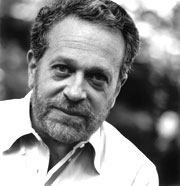
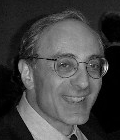
Just found out today that my labor economics professor really isn't Robert Reich - his name is Michael Reich. While that explains for the sudden growth in height (and loss of beard), it was a little bit disappointing. I soon found out, however, that 'my' Reich also is an economist-superstar, so I'll be fine..
Also, I should add that there's some new photos posted on picasaweb, right here. So check 'em out.
Berkeley says Hi!

I realize that I've been a bad boy for not writing anything in the last nine (!) days. I have, however, a serious writer's block. Pending the burst of brilliance that I'm waiting for, I'm just going to write down some things that come to mind.
To start in the present: I'm currently sitting at Hagen's place working on my todo list (writing on my blog, of course, being number one, underlined and made bold). Vid just sms-ed me the question whether I am homesick and I think I can honestly say that I am not. There are many reasons for that, 'stability' at home being an important one, and Hagen is definitely another. I met Hagen in the fall. He studies mechanical engineering here at Berkeley and is originally from Dresden, Germany. From picking me up at the airport and showing me around to fixing my bike, taking care of me and preparing my meals (frequently!), he has proven himself to be a very loyal and caring friend.
Yesterday, I went clubbing with my housemate Ali and his friend Manuel. We went to the poshy Ruby Skye in San Francisco (I'll post some pics when I get them from Ali). Had a good time and a slightly less entertaining ride back to Berkeley. Slept most of the alcohol off during the night and Hagen (again) saved me with a great 'Katerfrühstück' earlier today. The day before, me and Hagen went to explore The City and visited the famous burger and jazz joint Moose's. Unfortunately, the place wasn't serving any burgers in the evening and there was no music at that time. We managed to save the day though, by a good choice of night clubs afterwards (no pictures allowed).
All my days so far have been exploratory days; walking around the neighborhood, doing one or more chores and, generally, just having fun with the people that I met or meet. On my first full day here, we went to visit the U.S.S. Hornett, a renowned Aircraft Carrier that has been turned into a museum. We received a guided tour by a retired officer on the ship which was nothing less than wonderful. You can find the rest of the pictures here.
On such days I've also checked out the courses that I'd like to follow. So far my top four lists Social Stratification (grad, Sam Lucas), Political Sociology (grad, Margaret Weir), Quantitative Methods (undergrad, Leo Goodman) and Labor economics (undergrad, Robert Reich).
The house I'm living in, the Alpha Chi Sigma fraternity (if you hit full screen, you can see the AXE mark on the steps), is huge and - since the fraternity itself cannot fill it completely - open to students of all kind. I share my room with Manuel, a nuclear engineer - not the guy I went out with - who's hardly ever there. Although my room is not that special, the house comes with some great feats: a huge living room equipped with couches and projector for our entertainment needs; a football, pool and table tennis table to keep our muscles flexible; and a roof-terrace with a gorgeous view on the San Francisco bay (pictures will follow).
Tomorrow is a holiday, 'Martin Luther King jr. day', which gives me time to write e-mails to professors, make a final selection of courses I want to 'shop' between and work on the rest of my todo list. I will try to keep this blog updated frequently for your reading pleasure. As for more interactive communication, I can receive calls and text messages on (001) 510-3nine5-7nine61 exclusively (I'm not using my Dutch mobile anymore except as an alarm bell), although the reception isn't great. Additionally, I will be using MSN (occasionally) and Skype (more frequently) and prefer the latter. Well, that's it for now. Hagen and me are going to spend some time relaxing after our hard day's work ;)
P.S. I've tried to make my post a little bit interactive by placing a lot of links that should give a feeling of the events they encircle. Note that the picasa website that contains my uploaded pictures, requires you to log in with a Google account.
P.P.S. I'm writing in English because it is my prime language here. Plus, writing my blog in English provides me with a useful exercise in the context of my studies.
De lat van Berkeley

De grootsheid is het eerste dat opvalt. En dan heb ik het niet over academische kwaliteit, maar over de fysieke omgeving. De campus, allereerst, is enorm. In campuswoningen worden ongeveer 6.000 studenten gehuisvest. Daarnaast heeft de campus een American Football stadion, een baseball park, tientallen tennisbanen, zwembaden, cafés, winkels en in totaal 18 verschillende bibliotheken. Het dorpje Berkeley lijkt om de campus heen te zijn gebouwd en herbergt ook nog een aantal universiteitsgebouwen.
Wat ook indruk maakt is de inrichting van de campus. Hoewel er gebouwen bij staan die rechtstreeks uit Sovjet Rusland lijken te zijn geïmporteerd, vallen de meeste bouwwerken op door hun (neo-)klassieke stijl en imposante omvang. De enorme, oude, bomen maken het geheel tot een groene verschijning – de tientallen eekhoorntjes die op de campus rondhuppelen, voegen daar nog een vleugje disney aan toe.
Al wilde ik het niet in de eerste zin opschrijven, het gevoel van grootsheid werkt ook door op de studenten. Dat uit zich sterk in hun kledingkeuze: een Berkeley t-shirt. Niet dat iedere student met zo’n shirt rondloopt, maar toch minstens een kwart (van de 32,000). Wat echter nog meer opvalt is de houding van de studenten in college. Een voorbeeld. Het is vijf voor acht en de klas zit vol. Studenten die nu nog binnenkomen moeten staan en blijven ook staan. De les, overigens, begint pas om tien over. Het opmerkelijkste heb ik nog niet genoemd: ik heb het over acht uur in de morgen en over een ruimte met stoelen voor 160 mensen. Uiteindelijk zou de collegezaal zijn gevuld met om en nabij de 200 studenten.
Ik moet een duidelijke lijn trekken tussen undergraduate students (bachelorstudenten) en graduate students (studenten die zijn aangenomen om te promoveren). Eerstgenoemden zijn, en dan generaliseer ik uiteraard, zeer fanatiek, op het streberige af. De graduate studenten zijn daarentegen enorm relaxed, want blakend van zelfvertrouwen. Concurrentie lijkt dan ook vooral onder eerstgenoemden plaats te vinden. Grads zijn, mits ze naar tevredenheid blijven presteren, immers al van hun plaatsje verzekerd.
Natuurlijk valt de houding van studenten niet los te zien van de docenten die hen onderwijzen. In de eerste week verzekerde een professor mij reeds, verwijzend naar een collega: “he really knows his shit”. Ik denk dat die gevleugelde woorden voor de hele faculty gelden; ik heb in de eerste week elf vakken gevolgd en vond werkelijk alle docenten inspirerend lesgeven.
Wat wellicht nog zwaarder woog in de houding van de studenten, is wat er van studenten verwacht werd. Hoewel die eisen per vak enigszins verschilden kwam dat ruwweg neer op zo’n 100 pagina’s leeswerk per week voor de undergrads, aangevuld met een schrijfopdracht . Grads lezen al gauw een boek per week en schrijven daar een paper over. Aan het eind van zo’n cursus heb je dan 15 boeken gelezen en daar 15 papers over geschreven, plus een eindopdracht of tentamen.
Hoewel er veel verschillen waren met de UvA, vond ik dit laatste eigenlijk het meest fundamenteel; waar de UvA de lat lekker laag legt, net boven je enkels, en het aan de student is om meer uit zichzelf te halen, meer van zichzelf te vragen, wordt aan Berkeley de lat enorm hoog gelegd. En ook al ligt de lat dan net té hoog, de hoge verwachtingen inspireren tot grote inspanningen. Inspanningen waarvan – ik zal voor mijzelf spreken – ik niet wist dat ik die kon maken.
(dit artikel verscheen eerder in het Sociologisch Mokum en op ScienceGuide)
Afscheid Amerika

Ik begin hier handig in te worden! Na mijzelf via de Business Class check-in van een goede plek in het vliegtuig te hebben verzekerd, zit ik nu relaxed in een computerhokje met mijn laptop voor m’n neus in de Boarding Hall – in afwachting van mijn vertrek.
Als ik uit het raam kijk zie ik de neus van de dikke Boeing die ons over de oceaan zal dragen. En de raampjes langs zijn neus, z’n ogen van waaruit de piloten de lucht in zullen staren. Het is geen vriendelijk gezicht, maar wel een geruststellend. Als hij kan vliegen, dan kunnen wij het ook.
Het eten op het vliegveld was Amerikaans en doet verlangen naar Europa, zoals veel dingen hier. Ben benieuwd of ik hetzelfde zal voelen bij een ontmoeting of consumptie in Nederland; of ik het zal missen: Amerika, het Amerikaanse.
Afscheid nemen is onnatuurlijk. Wat vertrouwd is is goed, dat moet je bij je houden. Gek, alleen, dat dat wat vertrouwd is per maand kan verschillen...
Mijn vader had gelijk

(photo by Jef Maion)
Ik loop te hard. Ik merk het aan een blaar op mijn hiel. Het gaat automatisch en onbewust, maar niet onopgemerkt. Ik heb altijd haast. Lopen is voor mij instrumenteel om een eindpunt te bereiken. De weg er naartoe is onbelangrijk, het is de snelheid die telt.
Het blijft echter niet bij lopen, ik zie een parallel; een overeenkomstige benadering met het nastreven van mijn ambities. Niet dat ik roekeloos naar voren sprint of over lijken ga, maar ik voel druk en denk haast te hebben. Het doel is zo helder en ik heb simpelweg heel weinig geduld. Waar een snelle pas leidt tot blaren en/of een lompe tred, zorgt dit soort haast voor meer ongenoegen: stress, het gevoel ondermaats te presteren en, bovenal, het stellen van verkeerde prioriteiten.
Gelukkig gaat de vergelijking tussen wandel en ambitie niet geheel op. Ik ben mij bewust van mijn neigingen en ben alert op de gevaren (laat het feit dat ik deze reflecties opschrijf daar van getuigen).
Amerika, echter, dwingt mij tot re-kalibratie. De afstanden hier zijn groot, de tochten lang en de haast is er niet minder op. Wil ik het hier naar mijn zin hebben de komende maanden, dan moet ik mij onttrekken van de aanstekelijke haast om mij heen, mijn driften temmen en mijn lat verlagen. Ontstressen en onthaasten - en een beetje snel ook, zou ik er bijna aan toe voegen.
Dromen zijn een mooi alternatief voor (te) hard werken. Ik moet leren om meer te dromen.
Subscribe to:
Posts (Atom)


